ServicesWater Softeners
Water Softener Installation in Richardson
Hard water leaves scale on fixtures, glass and the inside of your water heater. We measure your hardness first, size a softener to how your home actually uses water, and install it with floors covered and the area left as clean as we found it.
When a Softener Is the Right Call
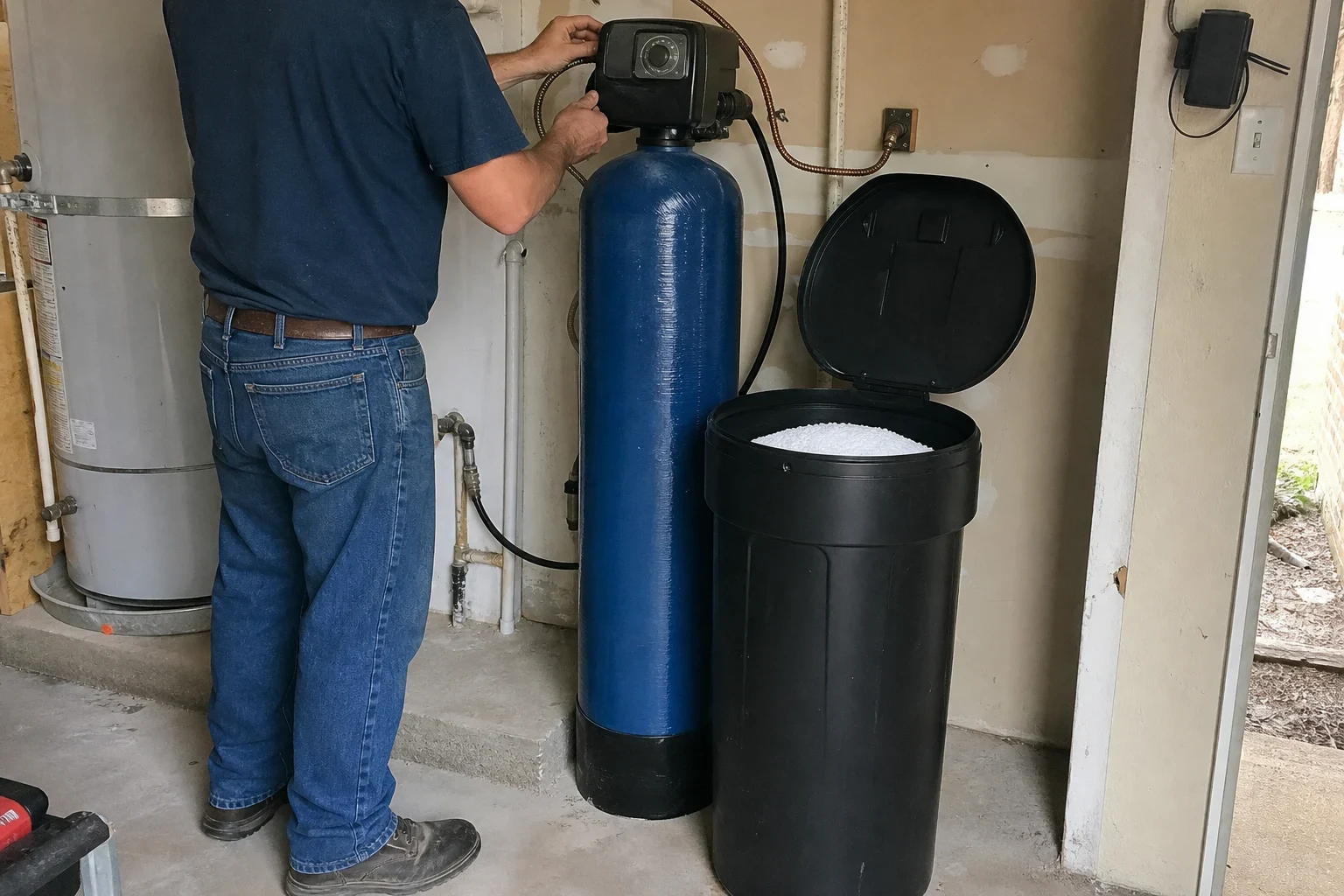
A water softener removes calcium and magnesium, the minerals that form scale. Inside the main tank, a bed of resin holds onto those hardness minerals and releases sodium or potassium in their place. Every so often the system rinses that resin with brine from a separate salt tank, a cycle called regeneration, and it is ready to work again.
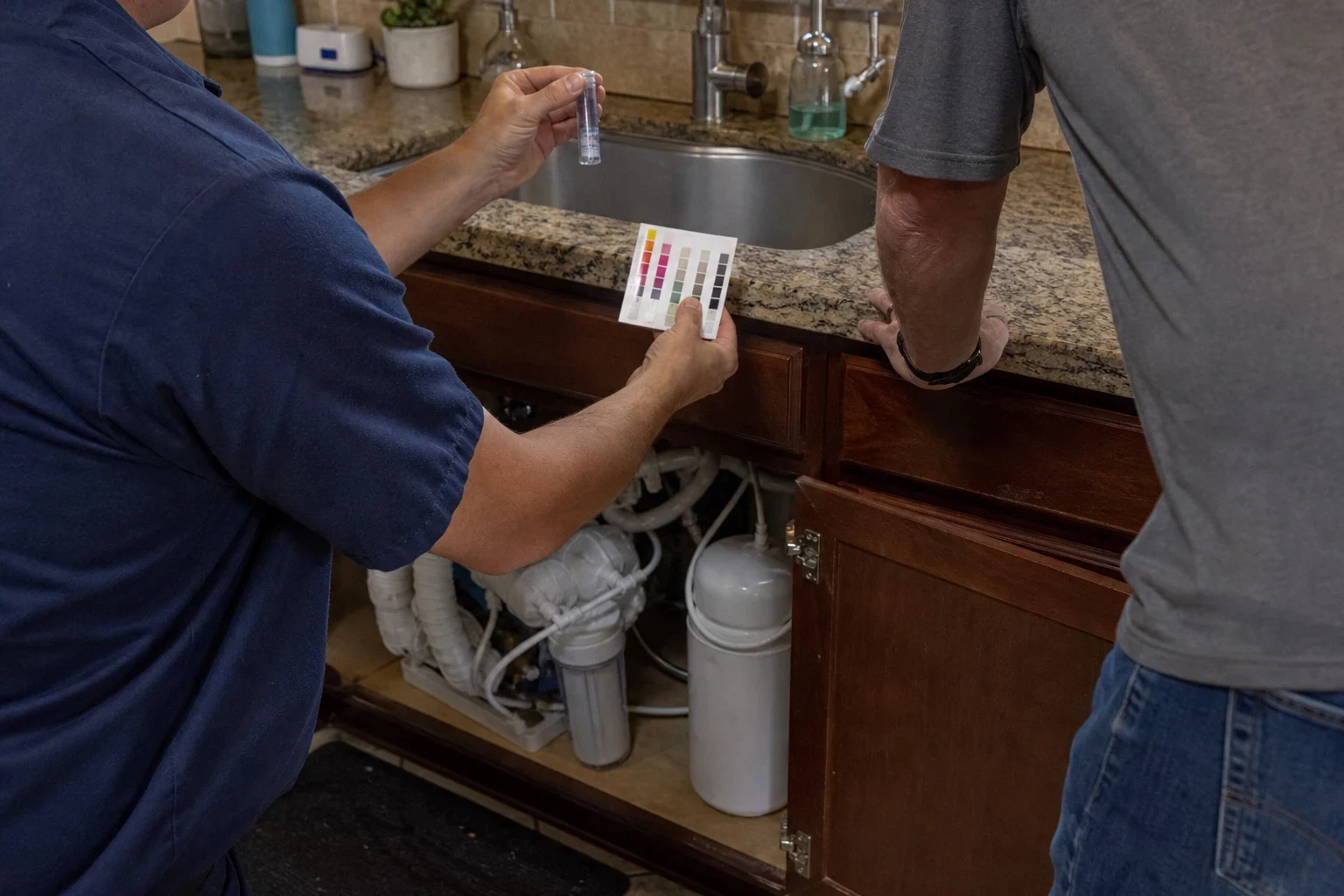
Not every home needs one. Hardness varies, and a reading tells us more than a guess. We start with a water test, show you the number, and tell you plainly whether a softener will make a visible difference. If chlorine taste is the real complaint, whole-home filtration may be the better fit, and we will say so.
What Your Softener Installation Includes
- Sizing from your reading
- We match grain capacity to your hardness and your household's daily use. A tank that is too small cycles more often than it should and burns through salt. One that is too large can leave resin sitting unused for long stretches.
- Metered control valve
- We favor valves that regenerate based on the water you have used, not a fixed calendar. That keeps salt and water use in line with your actual demand.
- Bypass and shutoff
- A bypass valve lets you route water around the softener for service or for an outdoor line, without shutting off water to your home.
- Drain line with a proper air gap
- The regeneration discharge runs to a suitable drain with an air gap, so wastewater cannot siphon back into your supply. Lines are secured and routed neatly along the wall.
- Protection and cleanup
- The first thing we carry in is floor protection: runners along the path from your door and a covered area around the install spot, with our boots covered before we step inside. Packaging, cut pipe and old fittings ride out with us, and we wipe down the new equipment and vacuum the space before the job is called finished.
- A walkthrough before we go
- We show you how to add salt, read the valve display and use the bypass. You keep the manuals and know what to check each month.
Signs Hard Water Is Working Against You
White crust on fixtures
Chalky buildup around faucets, showerheads and the base of the tub is mineral scale. It returns quickly after cleaning when water is hard.
Spotty glasses and dishes
Cloudy film after the dishwasher, even with rinse aid, usually points to calcium left behind as water dries.
Soap that will not lather
Hard water reacts with soap before it can foam. You end up reaching for extra shampoo and laundry detergent, and skin can still feel filmy after a rinse.
A water heater that pops or rumbles
Scale settles at the bottom of tank heaters and insulates the water from the burner. The noise is often the first clue, and efficiency drops with it.
Showerheads losing pressure
Narrow spray openings clog with mineral deposits over time. If soaking them in vinegar brings the pressure back, hardness is a likely cause.
What Shapes the Price of a Softener
Your quote depends on your water and on the space where the system goes. We list each part of the job separately so you can see what you are paying for. Standard professional installation included for qualifying homes.
Hardness and household size
A higher reading, or a busier household, calls for more grain capacity. A bigger resin tank costs more at the start but cycles less often.
Existing loop or new plumbing
If your home already has a softener loop, connection is straightforward. Without one, we tie into the main line, which adds pipe, fittings and time.
Valve type
Metered valves cost a little more than timer valves but tend to save salt and water over the years.
Pairing with other treatment
Adding a carbon stage for chlorine, or reverse osmosis at the kitchen sink, changes the scope. We price each piece on its own line.
How Installation Day Runs
- 1
Test and plan
Your water test gives us a hardness figure. We recommend a size and valve, explain the choice, and give you a written quote before anything is scheduled.
- 2
Protect the space
On the day, we cover the route from the entry to the install spot, along with nearby floors and anything stored close by. Many homes have a softener loop in the garage, which keeps the work tidy and contained.
- 3
Fit and connect
Water is shut off briefly while we connect the tank, valve, bypass and drain line. Connections are made with care, then pressure-tested and checked for leaks.
- 4
Load, program and run
We add resin and salt as needed, set the valve to your hardness and household size, and run a first regeneration while we are still there.
- 5
Clean up and walk through
Everything we brought in leaves with us. We clean the area, then walk you through salt, settings and the bypass.
Water Softener Questions
Will you tell me if I do not need a softener?
Yes. If your hardness reading is low, we will say a softener is not worth the cost and the upkeep. Some homes are better served by whole-home filtration or a drinking-water system instead.
Does softened water taste salty?
Most people do not notice a taste. Softening does add a small amount of sodium. If that concerns you, potassium chloride can replace salt, or a reverse osmosis system at the kitchen sink can give you low-sodium drinking water.
How much upkeep does a softener need?
Mostly adding salt. Look in the brine tank once a month and keep it roughly half full. Now and then, press a broom handle down into the salt to make sure it has not fused into a solid layer near the top, since that layer stops the system from drawing brine.
Where does the softener go?
Usually at the softener loop, often in the garage, or near where the main line enters your home. It needs a nearby drain and, for most valves, an electrical outlet. We confirm the spot during your water test visit.
How messy is the installation?
Very little. We cover floors and the path in, keep tools on mats, and take away all packaging and old parts. The aim is that the only change you notice afterward is the new equipment.
Find Out What Your Hardness Really Is
A short visit gives you a hardness reading and an honest view of whether softening pays off in your home. When it does, we quote the right size and install it with floors and fixtures protected from start to finish.