ServicesReverse Osmosis
Reverse Osmosis in Richardson, Fitted Neatly Under Your Sink
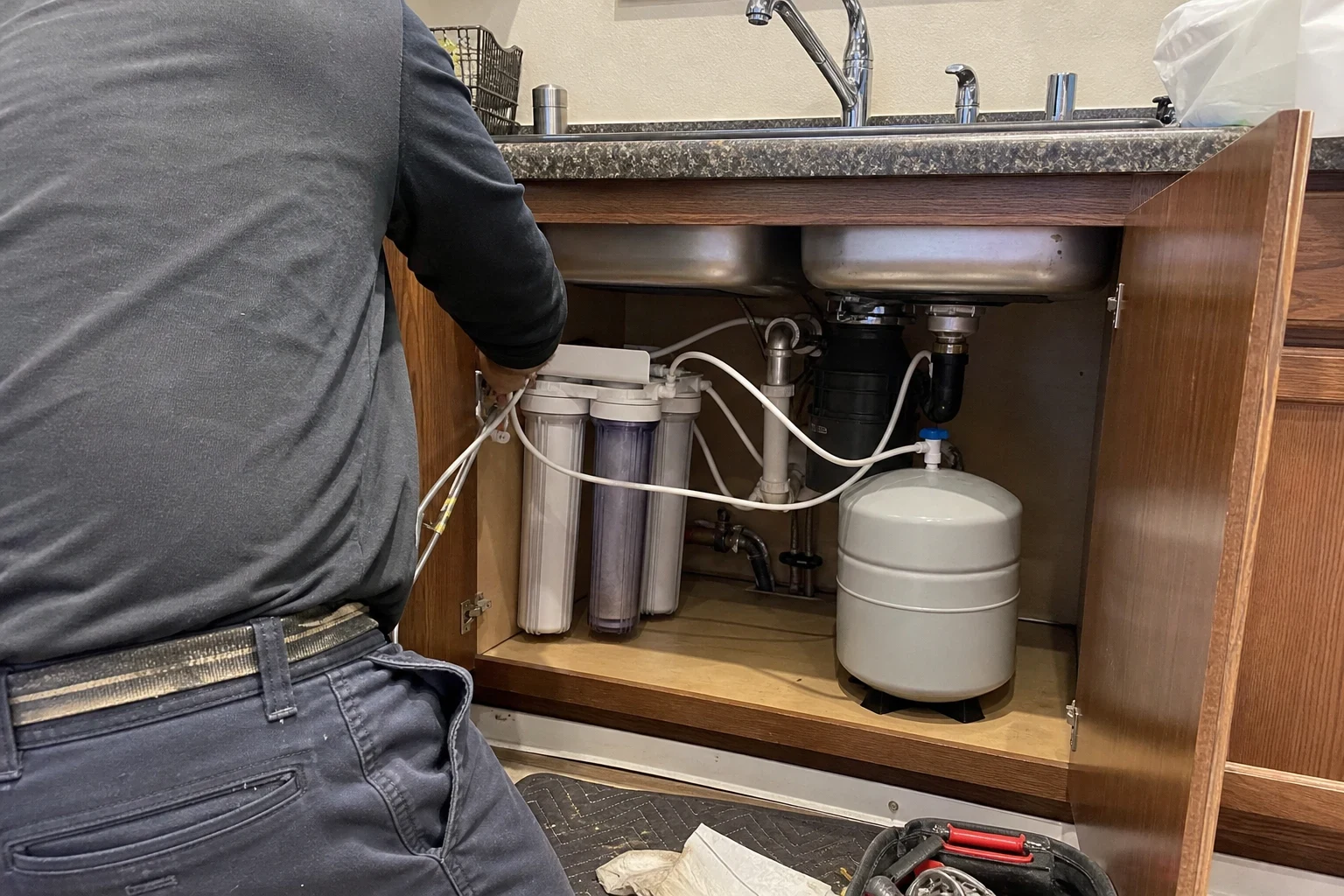
A reverse osmosis system gives you drinking and cooking water from a dedicated faucet at the kitchen sink. We test your water first, plan where every part will sit, and leave the cabinet as tidy as we found it.
Better Drinking Water Where You Actually Use It
Reverse osmosis pushes your water through a very fine membrane that holds back dissolved solids, metals such as lead from older pipes, and many trace contaminants. Carbon stages before and after the membrane take care of chlorine taste and odor. The result runs from its own small faucet beside your main tap, ready for a glass of water, a pot of pasta or the coffee maker.
It is the right call when your concern is the water you drink and cook with. If the chlorine smell in the shower bothers you, whole-home filtration is the better fit, and if scale is building up on fixtures, we may talk about water softeners. Many homes pair reverse osmosis with one of those.
Most of the work happens inside a kitchen cabinet, so we treat that space with care. Everything comes out, goes onto a protective mat, and goes back in the order you had it.
What the Installation Includes
Sediment and carbon prefilters
These catch grit and remove chlorine before water reaches the membrane. That protects the membrane and helps it last longer.
The reverse osmosis membrane
The heart of the system. It separates purified water from the dissolved material, which is rinsed to the drain.
Storage tank or tankless unit
A compact pressurized tank keeps filtered water ready to pour. Where cabinet space is tight, a tankless unit can be a neater fit, and we will show you both.
Dedicated faucet
We use an existing sprayer or soap hole when there is one. If the countertop needs a new hole, we drill it with the right bit for granite, quartz or laminate and vacuum the dust as we go.
Drain and supply connections
A drain saddle on the sink line, an air gap where needed, and a shutoff valve on the cold supply. Each joint is checked dry before we close the cabinet.
Refrigerator connection
Many people also want the fridge dispenser and ice to draw from the same system. We run a separate line to it and fasten the tubing along the cabinet so it stays hidden.
Signs a Reverse Osmosis System Makes Sense
- You buy bottled water every week
- Cases in the garage and plastic in the recycling bin add up. A filtered tap in the kitchen ends the grocery run for water.
- Ice cubes come out cloudy or taste off
- Dissolved minerals and chlorine show up most clearly in ice. Filtered water usually freezes clearer and tastes fresher.
- Your home has older plumbing
- Houses built before current lead rules may still have solder or brass fixtures that release lead at the tap. The membrane cuts lead in the water you drink and cook with, which is why it is so often suggested for older pipes.
- Coffee and tea never taste quite right
- Chlorine and dissolved solids change flavor. Many people notice the difference in their first cup.
- White film on kettles and glassware
- Spots that come back after every wash point to dissolved solids. The membrane removes most of them from the water you drink.
How Your Install Day Runs
- 1
Water test and a look under the sink
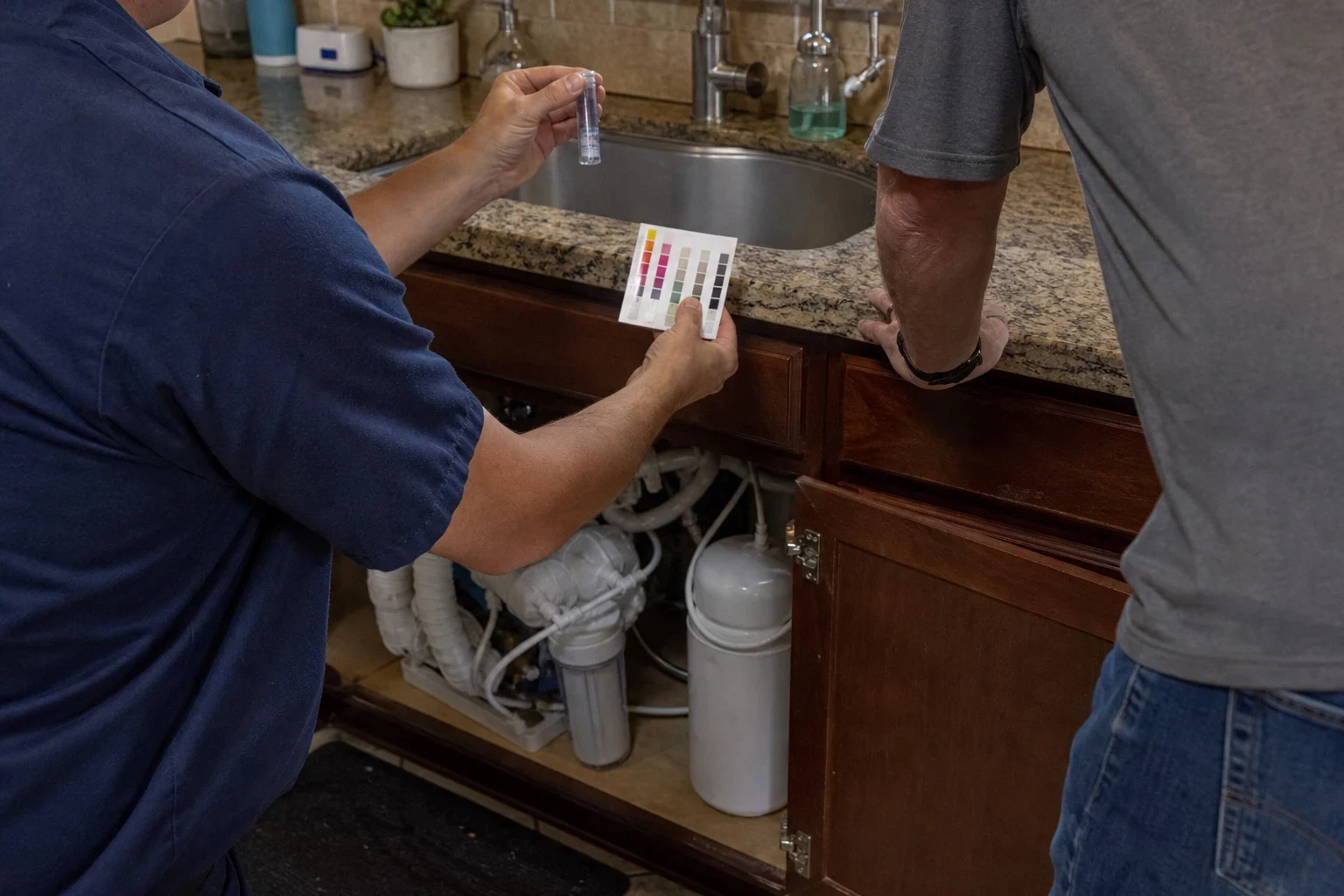
We start by testing your water so the recommendation fits what is actually in it. We also check cabinet space, the drain line and the cold supply so there are no surprises on the day.
- 2
A clear plan for placement
You see where the tank, filters and faucet will go before any tool comes out. If you have a garbage disposal or pull-out trash bin, we plan around it.
- 3
Careful installation
Drop cloths go down on the floor and a mat goes inside the cabinet. We make the connections, mount the filter housing to the cabinet wall, and route tubing so it stays clear of stored items.
- 4
Flush, check and clean up
The system is flushed, the tank filled and every fitting checked for drips. We wipe down the cabinet and countertop, take our packaging with us, and show you how to change the filters.
What Shapes the Cost
Reverse osmosis pricing depends mostly on the system you choose and what your kitchen needs to accept it. Standard professional installation is included for qualifying homes. We go through the options on the phone and after your water test, so you know what each line covers before anything is installed.
- Tank or tankless system
- Tankless units cost more up front but free up cabinet space and deliver water on demand. A traditional tank system is simpler and very reliable.
- Countertop material
- Using an existing hole costs nothing extra. Drilling stone or quartz takes more time and specialized bits than laminate.
- Extra stages and connections
- A remineralization stage, a fridge line or a second faucet each add parts and labor.
- Condition of the plumbing
- An old shutoff valve that will not close, or a corroded drain section, may need replacing before the system can connect safely. We point this out and explain why before doing it.
Reverse Osmosis Questions
- Does reverse osmosis waste a lot of water?
- Some water is sent to the drain to rinse the membrane, and the amount depends on the model and your water pressure. Newer systems are far more efficient than older ones. We can talk through ratios when you choose a unit, and a permeate pump can improve it further.
- Will it remove the minerals from my water?
- Yes, most dissolved minerals are removed along with contaminants. Some people like the crisp, light taste. If you prefer a fuller flavor, a remineralization stage adds a small amount of calcium and magnesium back.
- How often do the filters need changing?
- Prefilters usually need replacing every six to twelve months. The membrane typically runs for several years, and lighter use stretches that further. We show you how to swap them yourself, and it takes a few minutes with no tools beyond a housing wrench.
- Will it fit under my sink with a garbage disposal?
- In most kitchens it will. The filter bank mounts to the cabinet wall and the tank can stand to one side. When space is very tight, a tankless model usually solves it.
- Do you drill into granite or quartz countertops?
- We do when there is no spare hole to use. We protect the surface, drill slowly with a diamond bit and vacuum the dust immediately so nothing settles in the cabinet or on the floor.
Ready for Better Water at the Kitchen Tap
Start with a water test so the system matches your water and your cabinet. We serve Richardson and nearby towns such as Plano and Garland, and leave your kitchen exactly as tidy as we found it.